


Deep Space Products · Authorized Dealer
About Telescopi Italiani
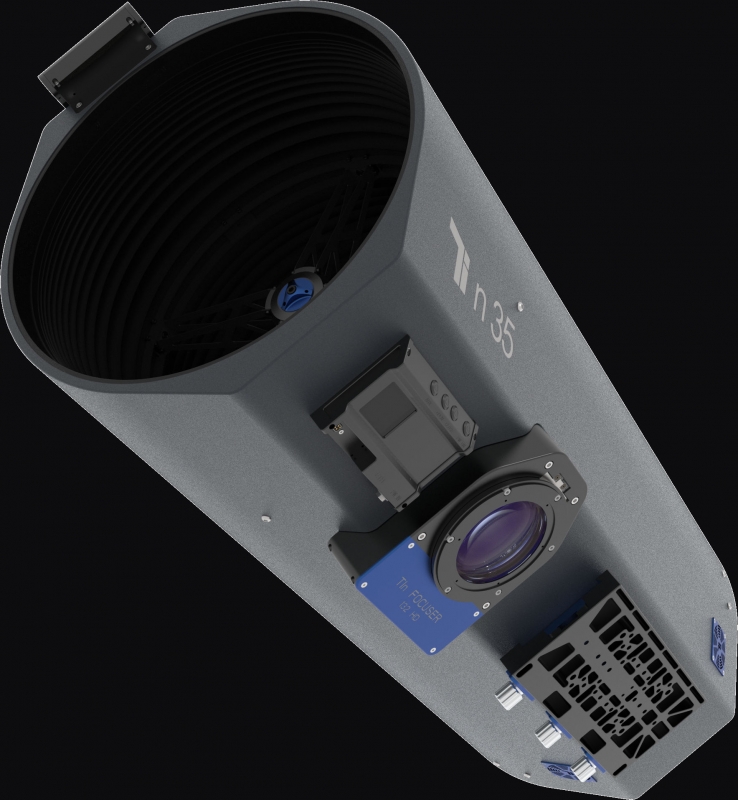
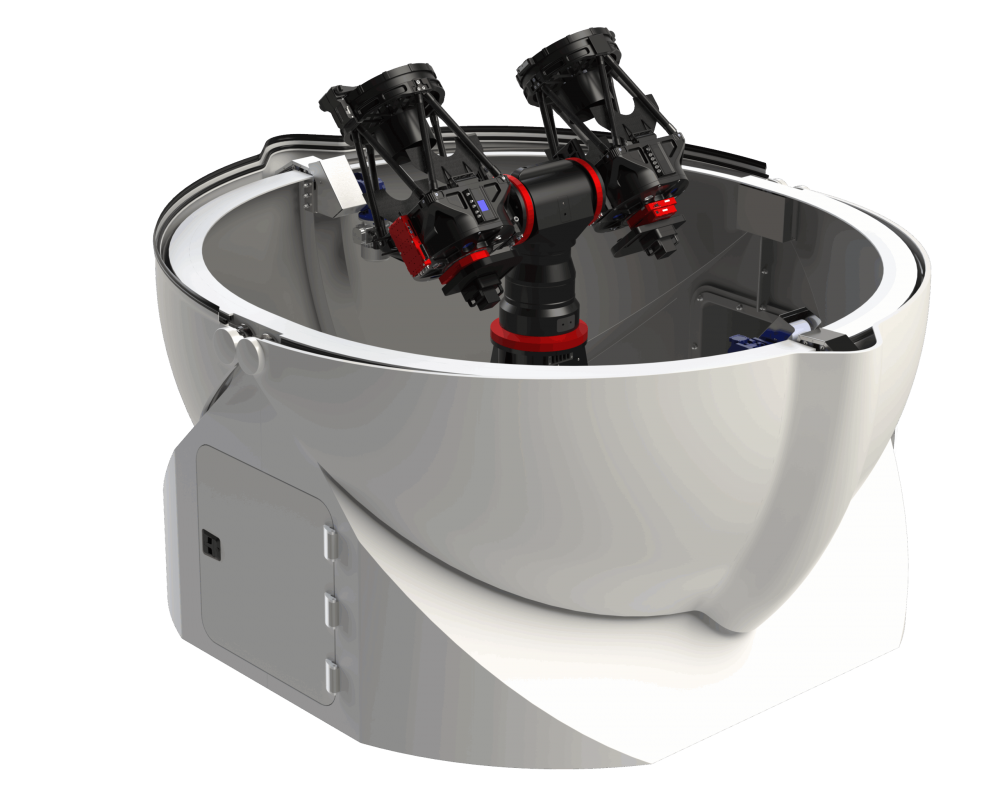
Italian-made ultra-fast professional astrographs — quartz optics, carbon fiber construction, and fully integrated electronics engineered for remote observatory imaging and Space Situational Awareness operations, from f/2.2 to f/5.0.
Authorized DealerBuilt by Engineers Who Image Under the Same Sky
Telescopi Italiani was founded near Pisa, Italy by Ing. Leonardo Priami — an aerospace engineer with 13 years of ESA program experience at Alta SpA, a space electric propulsion company — alongside Claudio Dandolo, a mining engineer with deep expertise in composite materials, and PhD Antonino Previti, an electronic engineer with a doctorate in robotics and 30 years designing optomechanical measurement instruments. All three are lifelong astronomers. The company exists because they couldn't find astrographs that met their own standards for optical performance, mechanical stability, and remote operability — so they designed their own.
What emerged is a focused product line: three optical configurations spanning 350 mm to 550 mm apertures at focal ratios down to f/2.2, all built with fine-annealed synthetic quartz mirrors, carbon fiber structures, and proprietary integrated electronics. Telescopi Italiani does not make eyepiece telescopes, visual refractors, or general-purpose instruments. They make fast and ultra-fast astrographs — and that deliberate narrowness of scope is what makes the engineering credible.
What Makes These Astrographs Different
The astronomy market has plenty of fast Newtonians and Cassegrain derivatives. Telescopi Italiani's engineering starts from a different set of priorities: diffraction-limited performance across wide fields at extreme focal ratios, delivered in a package that can operate remotely for years without requiring someone on-site to recollimate, retighten, or troubleshoot thermal issues. Every material choice, every mechanical decision, and the entire electronics architecture follows from that premise.
Quartz optics — not a luxury, a thermal decision
Every Telescopi Italiani astrograph uses a fine-annealed synthetic quartz primary mirror. Quartz has a coefficient of thermal expansion roughly an order of magnitude lower than standard borosilicate glass — which means the mirror reaches thermal equilibrium faster and holds figure more accurately through the temperature swings of a typical imaging night. In a fast optical system operating at f/2.2 or f/2.6, mirror seeing from a thermally lagging primary is the fastest way to destroy resolution. Quartz eliminates most of that problem at the source. Optional lightweight quartz mirrors reduce primary weight by approximately 55%, further accelerating equilibrium — and are included as standard on the 550 mm models.
Carbon fiber construction
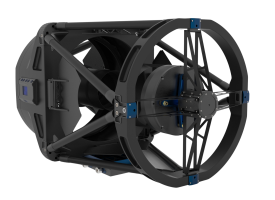
Telescopi Italiani builds their OTA structures from carbon fiber composite — truss tubes and sandwich panels that reduce total OTA weight by roughly 20% compared to equivalent-diameter instruments built with conventional materials. The weight reduction matters for mount loading, but the more important benefit is thermal stability and structural stiffness. A carbon fiber truss doesn't flex under wind loading the way a steel tube does, and it doesn't thermally expand or contract enough to shift collimation during a session. For a fast system where collimation tolerance is measured in microns, that rigidity is load-bearing in the engineering sense.
Proprietary mechanical innovations
The mechanical design includes several proprietary features that speak to how seriously Telescopi Italiani takes long-term unattended operation. The secondary mirror uses an X-Y pivoting tilt adjustment system where tilt and axial adjustments are handled through rotation and translation — designed so that adjusting one axis doesn't disturb the other, which is the failure mode that makes collimation on fast systems so frustrating. The primary mirror sits in a whiffletree lateral support that distributes load evenly without applying asymmetric force to the optic. Focusers are harmonic-drive units up to 132 mm in diameter, capable of handling heavy imaging trains without backlash. All structural components are FEM-optimized — modeled under load before they're manufactured.
Integrated electronics and unified control
Every astrograph ships with onboard electronics providing unified control of all telescope functions — focus, dust cover, thermal management, and secondary positioning — through a single proprietary software interface. WiFi and Ethernet connectivity are built in. The system is fully ASCOM Alpaca-compliant, which means it integrates directly with standard observatory automation stacks without requiring additional bridge hardware or custom drivers. For remote installations, this collapses what would normally be a nest of USB cables, serial adapters, and separate control boxes into one integrated system. It's not a convenience feature — it's a reliability decision.
The Telescopi Italiani Lineup at Deep Space Products
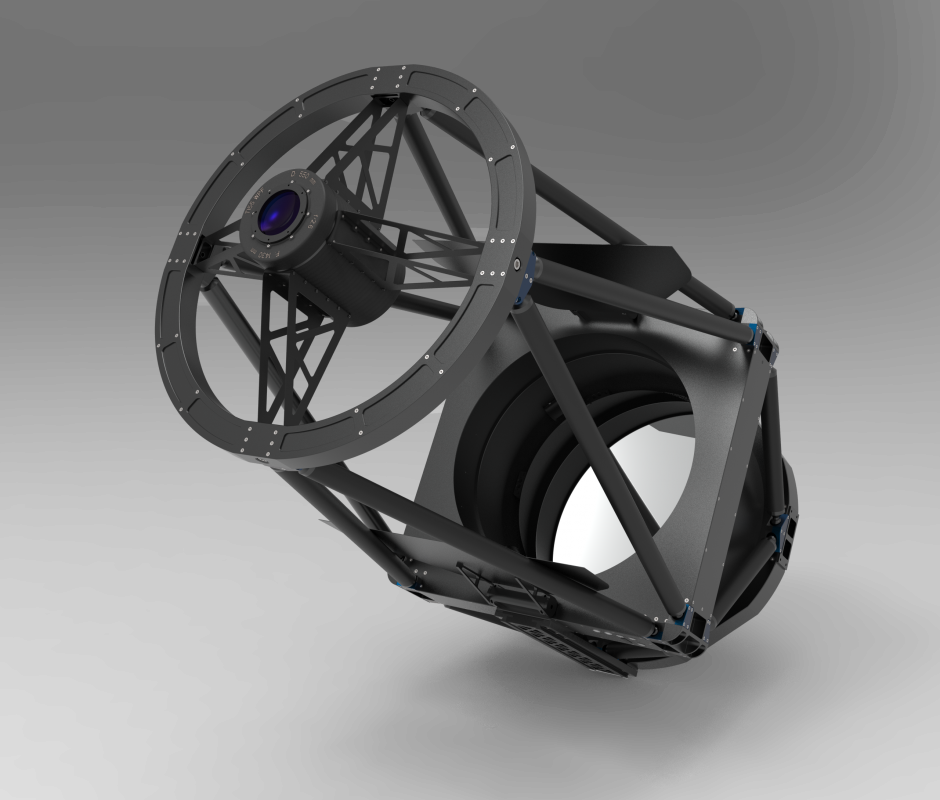
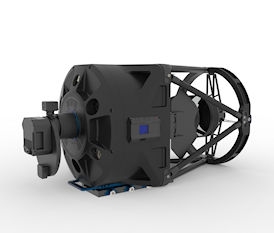
Telescopi Italiani produces three optical configurations across seven models, spanning 350 mm to 550 mm apertures. All models share quartz optics, carbon fiber construction, and integrated electronics. Contact Deep Space Products before ordering — these are build-to-order instruments with configuration options that affect lead time, and we can help you match the right series and aperture to your mount, sensor, and observatory design.
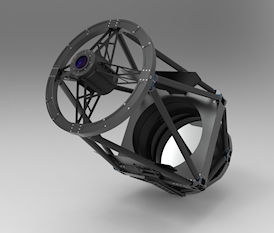
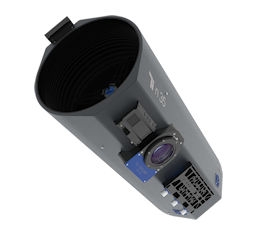
| Model | Configuration | Aperture | Focal Length | f/ | Corrected Field |
|---|---|---|---|---|---|
| TI 35 f/3.5 | Modified Harmer-Wynne | 350 mm | 1,225 mm | f/3.5 | 70 mm |
| TI 35 f/5.0 | Modified Harmer-Wynne | 350 mm | 1,750 mm | f/5.0 | 70 mm |
| TI 45 f/3.5 | Modified Harmer-Wynne | 450 mm | 1,575 mm | f/3.5 | 70 mm |
| TI 45 f/5.0 | Modified Harmer-Wynne | 450 mm | 2,250 mm | f/5.0 | 70 mm |
| TI 55 f/3.5 | Modified Harmer-Wynne | 550 mm | 1,925 mm | f/3.5 | 70 mm |
| TI 55 f/5.0 | Modified Harmer-Wynne | 550 mm | 2,750 mm | f/5.0 | 70 mm |
| TIn 35 f/2.3 | Hyperbolic Newtonian | 350 mm | 800 mm | f/2.3 | 67 mm |
| TIn 45 f/2.2 | Hyperbolic Newtonian | 450 mm | 1,000 mm | f/2.2 | 67 mm |
| TI WPF 45 f/2.6 | Wynne Prime Focus | 450 mm | 1,170 mm | f/2.6 | 67 mm |
| TI WPF 55 f/2.6 | Wynne Prime Focus | 550 mm | 1,450 mm | f/2.6 | 67 mm |
TI Series — f/3.5 and f/5.0
Modified Harmer-Wynne configuration with spherical secondary and refractive corrector. 70 mm diffraction-limited field, >90% edge illumination, 130–200 mm backfocus. The widest corrected field in the lineup — ideal for large-format sensors on permanent installations. Available in 350, 450, and 550 mm apertures.
TIn Series — f/2.2 and f/2.3
Hyperbolic primary with a 120 mm four-element field corrector reaching f/2.2. 67 mm corrected field covers the IMX411 sensor corner with >85% edge illumination. 132 mm harmonic-drive focuser. Maximum imaging throughput for SSA, sky surveys, and high-frame-rate remote hosting. Available in 350 and 450 mm apertures.
TI WPF Series — f/2.6
164 mm three-element Wynne corrector at prime focus. Very low obstruction — 35% on the 550 mm model. 67 mm corrected field with simple, reliable collimation. Pairs with the optional CFW-508 filter wheel for broadband and narrowband flexibility. The optimal configuration for remote observatories prioritizing imaging throughput. Available in 450 and 550 mm apertures.
Factory Options and Accessories
Each astrograph can be configured with factory-installed options. These aren't aftermarket add-ons — they're engineered as part of the telescope system and installed before the instrument ships. Discuss options with Deep Space Products before ordering; some configurations affect lead time, and we want to make sure the instrument that arrives matches the observatory it's going into.
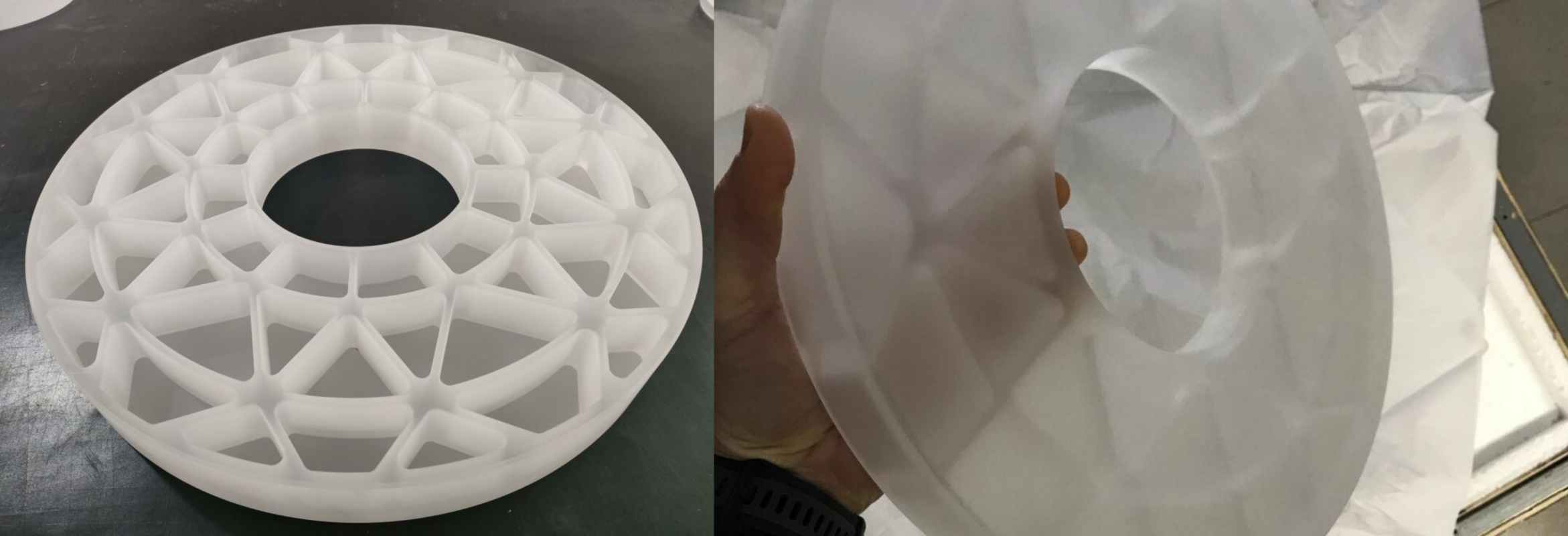
Lightweight quartz primary mirror
Reduces primary mirror weight by approximately 55%, accelerating thermal equilibrium and reducing the load on primary mirror supports. Included as standard on TI 55 and TI WPF 55 models; available as an option on all other models.
TI-110 field rotator
110 mm clear aperture rotator integrated into the back plate. A 160 mm worm wheel driven by a precision stepper motor with preloaded steel cross roller bearings provides 0.64 arcsecond per step resolution and under 7 µm runout. Controlled through the integrated electronics system.
Motorized dust cover
Plug-and-play motorized cover controllable through the Telescopi Italiani Software Suite, ASCOM Alpaca, or direct API commands. For remote and unattended installations, this is effectively mandatory — you can't send someone out to pop a dust cap off at midnight.
TI-112 dovetail system
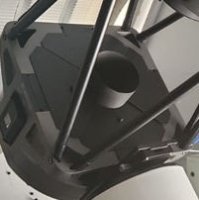
Precision dovetail enabling single-person declination-axis balancing with a screw wrench. Bolt patterns are compatible with Paramount, Astro-Physics, PlaneWave, and 10Micron® mounts — the mount brands most commonly paired with instruments in this class.
CFW-508 compact filter wheel
Purpose-designed for TI WPF prime focus astrographs. Holds 8 × 50×50 mm filters plus 2 open positions with minimal front obstruction. If you're running broadband and narrowband on a WPF, this is how it's done.
Why Deep Space Products for Telescopi Italiani
Buying an astrograph in this class isn't a catalog transaction. The instrument needs to match the mount, the sensor, the automation stack, and the site — and getting any of those wrong means months of lead time lost on a configuration that doesn't perform as expected. Deep Space Products works through all of that with you before an order is placed. We've built complete observatory systems around these instruments, and we understand how they integrate with the 10Micron, PlaneWave, and Pegasus Astro equipment we also carry.
What the DSP–Telescopi Italiani relationship means for you
- Authorized dealer — direct purchase channel with domestic support and coordination with the manufacturer in Italy
- System design consultation — we evaluate your mount, sensor, filter requirements, and automation goals before recommending a specific model and configuration
- Mount compatibility expertise — the TI-112 dovetail system supports 10Micron, Astro-Physics, Paramount, and PlaneWave mounts, and we can advise on the right pairing for your payload and imaging goals
- Integration with observatory automation — ASCOM Alpaca compliance means these astrographs slot into standard automation stacks, and we can help you architect the control system around the telescope
- DSP Remote hosting compatibility — Telescopi Italiani astrographs are well-suited for hosted deployment at our Bortle 1 facility in southwest New Mexico, and we can design a complete pier-to-sensor installation
- Long-term support — we're not a one-time transaction. If something needs attention after the instrument is installed, you have a domestic contact who knows your system
DSP Remote: Your Astrograph Under Bortle 1 Skies
DSP Remote is our telescope hosting facility in southwest New Mexico — Bortle 1, SQM above 21.7 mag/arcsec², and an average of 286 fully clear nights per year. A Telescopi Italiani astrograph is a natural fit for hosted operation: the integrated electronics simplify cabling, the quartz optics eliminate thermal equilibrium delays at session start, and the carbon fiber structure holds collimation through temperature swings without on-site intervention. The TIn series at f/2.2 is particularly compelling for remote hosting — maximum imaging throughput per hour under skies where every clear hour counts.
We can help you design a complete DSP Remote installation — mount, astrograph, sensor, automation, and pier — with the Telescopi Italiani instrument sized to your imaging goals. Contact us early in the planning process; build-to-order lead times and pier infrastructure take time to coordinate.
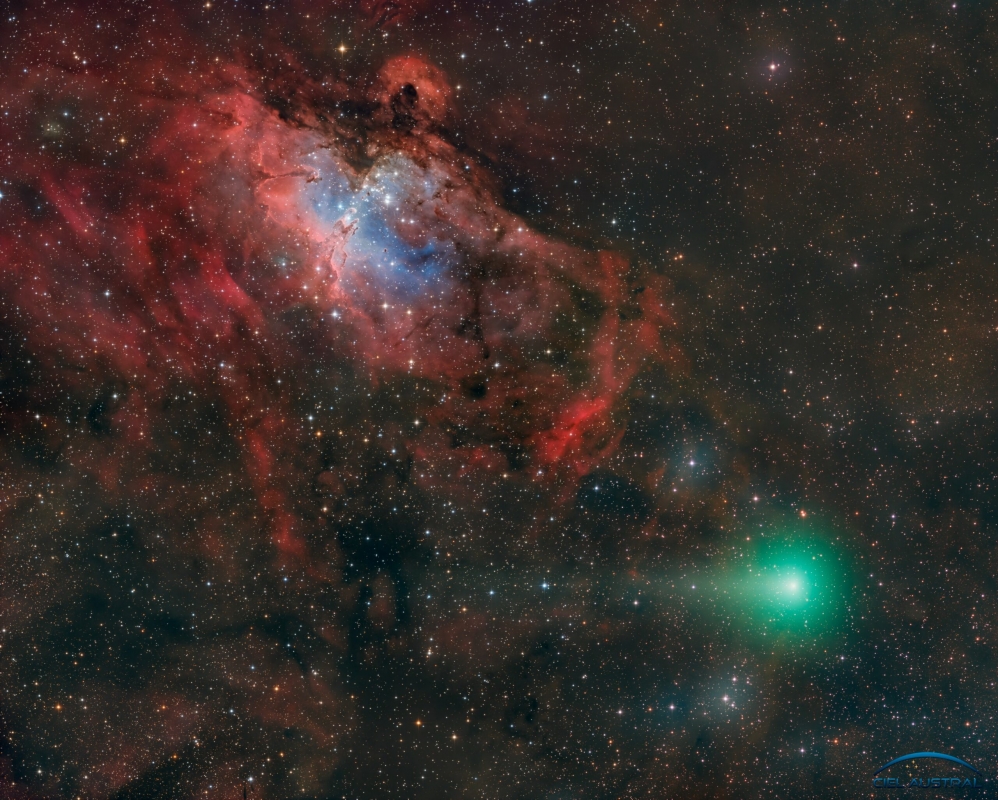
Image captured with a Telescopi Italiani TI45 astrograph. Credit: Team CielAustral.
Who Uses Telescopi Italiani Astrographs
Telescopi Italiani's client base spans the range of serious imaging and research — from advanced amateur astrophotographers building permanent observatories, to institutional customers operating telescope arrays for space surveillance. The same core engineering serves all of them, scaled by aperture and configured for the application.
Advanced astrophotographers with permanent observatories
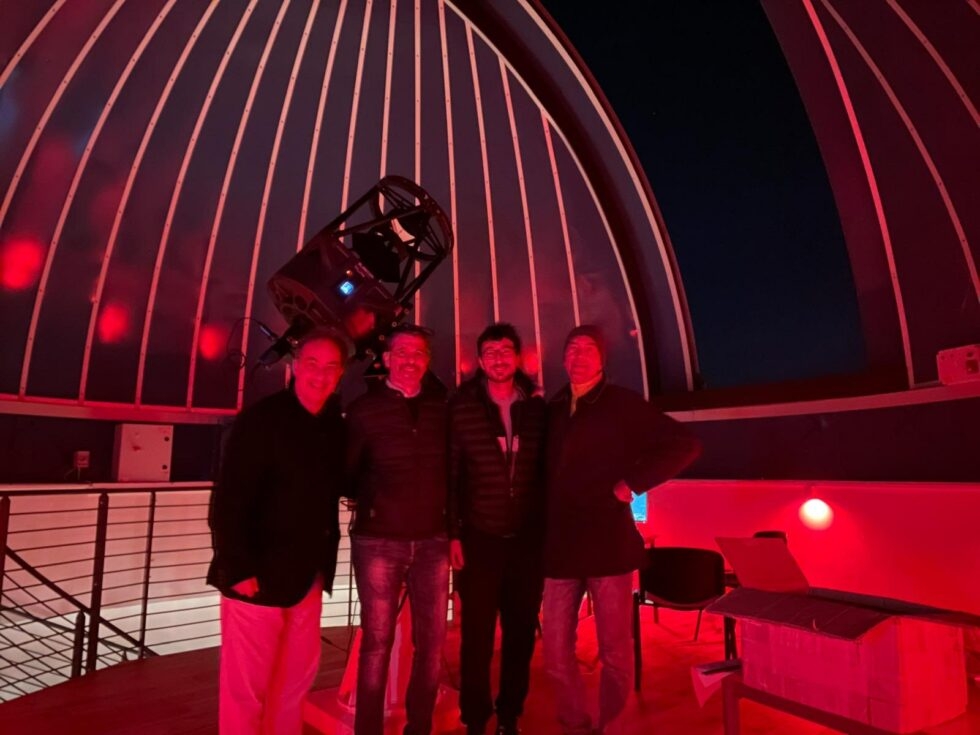
For someone putting a high-end astrograph on a 10Micron GM2000HPS, GM3000HPS, or GM4000HPS in a permanent pier installation, the TI or TI WPF series at 450–550 mm delivers the combination of field width, imaging speed, and mechanical stability that a serious deep-sky program demands. The integrated electronics eliminate the cable management problems that plague remote systems, and the quartz optics mean the instrument is ready to image at session start — not 45 minutes after the roof opens. These are instruments for people who have solved every other problem in their imaging chain and want an OTA that won't be the weak link.
Remote observatory operators and hosting facilities
The entire Telescopi Italiani design philosophy — WiFi/Ethernet control, ASCOM Alpaca compliance, thermally stable optics, rigid carbon fiber structures — is aimed at systems that operate without someone standing next to the telescope. For remote hosting operators and individuals running unattended observatories at dark sites, these astrographs reduce the frequency and severity of on-site interventions. The collimation holds. The focus holds. The electronics don't need rebooting. That's the value proposition for remote operation: not features on a spec sheet, but nights where nothing goes wrong.
Space Situational Awareness and survey programs
The TIn series at f/2.2 and the TI WPF at f/2.6 are explicitly designed for high-throughput imaging — short exposures over wide fields, repeated across large areas of sky. Telescopi Italiani works with strategic partners on SSA and SST solutions, including telescope arrays engineered for space debris tracking. The corrected fields, low obstruction ratios, and extreme focal speeds are not incidental features — they're the design brief. Institutional buyers should contact Deep Space Products for astronomy applications; for defense or aerospace use cases, Telescopi Italiani should be contacted directly.
Frequently Asked Questions About Telescopi Italiani
Where are Telescopi Italiani astrographs manufactured?
Telescopi Italiani is headquartered in Crespina, near Pisa, Italy, with a registered office in Roma. All design and manufacturing takes place in Italy. They also maintain a USA correspondence office in Wilmington, North Carolina. These are build-to-order instruments — lead times vary by model and configuration, so contact Deep Space Products for current availability before placing an order.
What is the difference between the TI, TIn, and TI WPF series?
The TI series uses a modified Harmer-Wynne optical configuration — the widest corrected field (70 mm) and the most versatile backfocus range (130–200 mm), available from f/3.5 to f/5.0. The TIn series is an ultra-fast hyperbolic Newtonian reaching f/2.2 with a 120 mm four-element corrector — maximum imaging throughput for survey and SSA work. The TI WPF series uses a 164 mm three-element Wynne corrector at prime focus, achieving f/2.6 with very low obstruction (35–42%) — the best balance of speed and optical efficiency for remote broadband and narrowband imaging. Contact Deep Space Products to discuss which configuration fits your sensor, mount, and imaging goals.
Which mounts are compatible with Telescopi Italiani astrographs?
The optional TI-112 dovetail system provides bolt patterns for Paramount, Astro-Physics, PlaneWave, and 10Micron mounts. Carbon fiber construction keeps OTAs roughly 20% lighter than comparable-diameter instruments, making them practical for the GM2000 class and above. Deep Space Products carries 10Micron and PlaneWave mounts alongside Telescopi Italiani — we can help you size the right mount for the astrograph and imaging train you're planning.
Why quartz mirrors instead of standard borosilicate glass?
Quartz has a dramatically lower coefficient of thermal expansion than borosilicate. In practical terms, a quartz primary reaches thermal equilibrium faster and holds optical figure more accurately through the temperature changes of a typical imaging night. At f/2.2 or f/2.6, a thermally lagging mirror produces mirror seeing that destroys the resolution advantage the fast optics are supposed to deliver. Quartz addresses that problem at the material level rather than trying to compensate for it with ventilation or active thermal control — though Telescopi Italiani includes automated thermal management as well.
Can these astrographs be operated fully remotely?
Yes — that's the core design premise. Integrated onboard electronics provide WiFi and Ethernet control of all telescope functions, with full ASCOM Alpaca compliance. Focus, dust cover, thermal management, and secondary positioning are all accessible through a single software interface. The carbon fiber structure holds collimation through temperature swings, and the quartz optics reach equilibrium without intervention. Deep Space Products can help you integrate a Telescopi Italiani astrograph into your existing automation stack or design a complete remote system from scratch.
Can a Telescopi Italiani astrograph be hosted at DSP Remote?
Yes. Telescopi Italiani astrographs are well-suited for hosted deployment at DSP Remote — the integrated electronics simplify cabling, and the thermally stable optics and rigid structure reduce on-site maintenance requirements. We can design a complete installation from pier to sensor. Contact Deep Space Products early in the planning process; build-to-order instrument lead times and site infrastructure preparation need to be coordinated.
Does Telescopi Italiani offer observatory design services?
Yes. Beyond manufacturing astrographs, Telescopi Italiani provides end-to-end technical consultancy for fully automated turnkey observatories — covering bespoke observatory design, hardware/software integration, and advanced remote automation. They also partner on SSA/SST solutions including telescope arrays for space debris monitoring. For astronomy observatory projects in the U.S., contact Deep Space Products and we'll coordinate with the Telescopi Italiani team as needed.
Images Captured with Telescopi Italiani Astrographs
These deep-sky images were captured by Team CielAustral using a Telescopi Italiani astrograph under remote dark-sky conditions — the same operational model these instruments are designed to support.
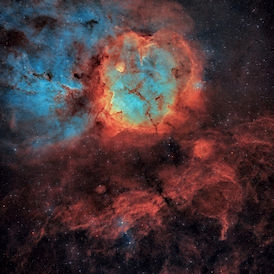
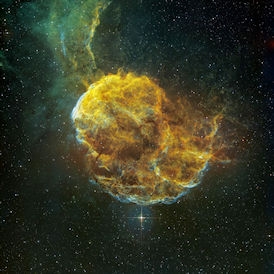
Image credits: Team CielAustral (NGC6357, SH2-284, ); David Lindemann (IC443). Full-resolution versions are available by clicking the thumbnail image.
Ready to talk about a Telescopi Italiani build?
Deep Space Products is an authorized Telescopi Italiani dealer with experience integrating these astrographs into complete observatory systems — from personal piers to hosted installations at DSP Remote under Bortle 1 skies.
Contact Deep Space Products Shop Telescopi Italiani
